
Is a Wafer Style Pressure Sensor the Upgrade Your System Needs?
Nov 24th 2025
We often see industrial control systems fail because they rely on outdated or intrusive methods for taking measurements. Traditional sensors require complex tap points, frequent calibration, and can disrupt flow, leading to inconsistent data and costly maintenance. In our experience, this reliance on interruption is the single largest hurdle to achieving true system efficiency. When fluid control is critical, whether managing municipal water or chemical processes, operators need immediate, non-invasive data that doesn't compromise the integrity of the line. The solution isn't adding more complexity; it’s embedding intelligence directly into the existing infrastructure.
We revolutionize data acquisition by utilizing components designed for simplicity and precision. At the heart of this innovation is the Wafer Style Pressure Sensor. This sensor seamlessly mounts between flanges, becoming a nearly invisible part of the process line while providing highly accurate pressure readings. This technology eliminates intrusive taps and complicated installation procedures. Furthermore, precise pressure data is useless without a reliable mechanism to translate it into action. That’s why we couple this sensing technology with robust, high-performance Rubber Expansion Joints. These joints protect the sensor and the entire piping system from destructive vibration and thermal stress. By providing you with an integrated solution, we help ensure your pressure data is always stable, accurate, and ready for immediate use by your control system.
Wafer Style Pressure Sensor: Invisible Precision
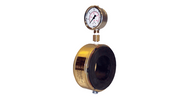
A Wafer Style Pressure Sensor is a thin, disc-shaped device designed to be sandwiched between two pipe flanges. It takes pressure measurements without requiring a separate access point or penetration into the main piping.
The key benefit of this design is its non-intrusive nature. Unlike traditional sensors that require complex fittings and tap-offs, our wafer-style sensors simply integrate into the flange assembly. This design minimizes the chances of leaks and reduces installation time dramatically. We place these sensors in your Instrumentation category to provide a clean, reliable signal that helps your team monitor pressure across critical flow paths. This immediate, stable feedback is essential for maintaining safety and optimizing pump performance in both our Waterworks and Industrial applications.
Rubber Expansion Joints: Protecting the Integrity of the System
A Rubber Expansion Joint is a flexible connector installed in piping systems to absorb movement, vibration, and noise. They are essential for protecting both rigid components and sensitive instrumentation.
We stock these joints because they are crucial for system longevity. In any industrial environment, pumps and compressors create constant vibration. Thermal changes also cause pipes to expand and contract. Our Rubber Expansion Joints isolate these forces, preventing them from damaging brittle equipment like gauges, Wafer Style Pressure Sensors, and valve seats. By including these robust components, primarily found in our Industrial inventory, we help ensure your pressure readings remain accurate and that your piping system lasts for decades, cutting down on costly repairs and maintenance cycles.
Integrating Instrumentation for Complete Control
Accurate pressure measurement from a sensor is just one piece of the puzzle. To build a robust control system, you need the full spectrum of monitoring tools.
We provide a comprehensive range of instrumentation, including Pressure Transmitters and Pressure Gauges. Your Wafer Style Pressure Sensor sends its signal to a transmitter, which converts the measurement into an electrical output for your control system. A local Pressure Gauge provides an immediate visual check for field operators. By offering you both the high-tech sensors and the reliable visual gauges, we ensure your team has redundant methods for verifying system health. This multi-layered approach to diagnostics is vital for maintaining the safety and efficiency of your HVAC and industrial processes.
Field Service: Our Commitment to Your Uptime
We understand that even the best components require expert guidance for proper integration and long-term performance. That's where our Field Service comes in.
We don't just ship products; we offer hands-on support. Our Field Service team is available to assist your technicians with the installation and calibration of complex systems, including ensuring your Wafer Style Pressure Sensor is correctly installed between flanges and communicating accurately with your control hardware. This commitment to on-site support minimizes commissioning delays and helps you avoid installation errors, guaranteeing the highest level of system integrity from day one.
Conclusion: Engineered Confidence from Our Inventory
Achieving optimal fluid control means eliminating guesswork and embracing reliable data. We help you move beyond reactive maintenance by providing foundational components like the seamless Wafer Style Pressure Sensor and the protective Rubber Expansion Joints. Our specialized inventory across Waterworks, Industrial, Instrumentation, and HVAC is meticulously curated with top brands and backed by expert support. We are not just a supplier; we are your partner in engineering reliable, efficient, and safe fluid systems. Your operational confidence starts with the quality components and the essential Field Service support you find with Lehigh Valley Valve.
Frequently Asked Questions (FAQs)
Q1: What is the fundamental difference between a pressure gauge and a pressure transmitter?
A: Gauge is a local sight-read; transmitter converts pressure to a remote electrical signal.
Q2: Why are expansion joints necessary in industrial piping systems?
A: They absorb thermal movement, vibration, and noise, protecting rigid pipe components effectively.
Q3: What is a "flanged" connection, and why is it used for sensors and large valves?
A: Flanged connections use bolted rims for a strong, leak-proof, and easily maintained pipe assembly.
Q4: How does vibration affect the accuracy and life of pressure instrumentation?
A: Vibration causes mechanical wear, leading to poor accuracy and significantly shortening the instrument's lifespan.
Q5: What is the difference between a check valve and a control valve?
A: Check valves close automatically to prevent backflow; control valves modulate flow via external power.