
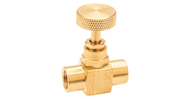
What Is a Needle Valve? A Simple Guide to Precise Flow Control
Mar 18th 2026
We know that even a tiny part can make or break a huge industrial system. In the world of moving liquids and gases, being exact is not just a goal. It is a strict rule. One of the best tools for this job is the needle valve. This special device helps you control flow with incredible accuracy. Whether you need to check a gauge or feed chemicals into a line, this valve is your best friend. Many systems use an NPT brass needle valve to keep connections tight and leak-free in everyday setups.
Our team thinks of these parts as the hidden stars of the control world. A needle valve has a long, skinny point that fits into a matching hole. This design creates a tiny opening that changes size when you turn the handle. Since the screw threads are very fine, you have to turn the handle many times to open it. This gives you a level of control that a regular ball valve just cannot provide. When you use an NPT brass needle valve, the tapered threads help create a perfect seal every single time.
How Does a Needle Valve Actually Work?
The secret is the way the needle point moves in and out of the seat. We find that most people are surprised by how much control this simple design offers. As you turn the wheel, the needle moves slowly toward or away from the opening. This creates a small gap that limits how much fluid or gas can get through. Unlike a simple on-off switch, this valve is built to throttle. It gives you a steady, smooth flow that is vital for sensitive jobs.
The materials used to make the valve really matter for how long it lasts. Brass is a top choice because it does not rust easily in water or oil. It is also a great way to save money compared to stainless steel for many common projects. We often suggest these valves for lab work or vacuum systems where you need things to be exactly right.
What Are the Main Parts of a Needle Valve?
To see how these work, we need to look at what is inside. Every part has a job to do to keep the pressure safe and the flow steady. In many big industrial jobs, these valves must handle high pressure, sometimes up to 5,000 or even 10,000 PSI.
- The Valve Body: This is the heavy outer shell that holds everything together.
- The Tapered Stem: This is the actual "needle" that moves up and down.
- The Seat: This is the spot where the needle rests to stop the flow completely.
- The Packing: This is a seal that stops leaks from coming out near the handle.
- The Bonnet: This part connects the main body to the handle and the stem.
|
Component |
Common Materials |
What It Does |
|
Body |
Brass, Stainless Steel |
Holds the pressure and connects to your pipes |
|
Stem |
Stainless Steel, Monel |
Controls the flow by moving up and down |
|
Packing |
PTFE (Teflon), Graphite |
Stops leaks from escaping the valve |
|
Handle |
Aluminum, Steel, Plastic |
Lets the operator make easy adjustments |
Where Do We Use Needle Valves Today?
We see these valves in almost every industry that needs careful measurements. In power plants, they help control steam going to sensitive tools. In the oil and gas world, they protect expensive sensors from sudden bursts of pressure. They are also very common in hydraulic systems to control how fast a machine moves. Because they handle high pressure so well at low speeds, they are perfect for chemical plants.
Another big use is in water treatment centers. Workers use them to slowly drip chemicals into the water at a steady pace. Without this control, the water might not be safe to use. Industry experts prefer needle valves over ball valves when the flow is less than one gallon per minute. The reliability of these valves keeps systems running safely for a long time.
What Should You Think About Before Buying?
Picking the right valve is about more than just the size of the pipe. We always tell our customers to check the pressure and temperature limits first. You also need to make sure the metal can handle the liquid or gas you are using. For example, brass works great for air and water, but it might struggle with strong acids. You should also check the flow rating to make sure it can handle the volume you need.
Installing the valve correctly is also a big deal. You need a good seal on the threads to prevent leaks, especially with gas. We suggest using high-quality tape or sealant that fits your specific job. Always make sure the flow is going in the direction of the arrow on the valve body.
Why Is Precision the Key to a Healthy System?
In our experience, a system is only as good as its smallest part. Using high-quality parts helps you avoid broken machines and expensive repairs. A good valve makes sure your readings stay right and your tools stay safe. We focus on giving you the best advice and parts so your business stays on track.
When you need a dependable NPT brass needle valve or other special parts, Lehigh Valley Valve is here to help. We have the knowledge and the stock to keep your project moving forward. We care about quality, and we make sure every part we send out is ready for work. Visit Lehigh Valley Valve today to see our full list of products and services.
Frequently Asked Questions
What is a needle valve used for?
We use needle valves when we need to control flow very carefully at low speeds. They are great for protecting tools from pressure spikes or measuring out liquids in a lab. Their design lets you make tiny changes that keep your sensitive equipment safe from damage.
What does a needle valve look like?
A needle valve looks like a small, narrow faucet with a handle on top. It usually has a "T" shaped handle or a round wheel. The body is small, and if you look inside, you will see a long, sharp point that looks like a needle.
What are common problems with needle valves?
The most common problems we see are clogs from dirt and worn-out seals. Because the opening is so tiny, even a little bit of grit can block the flow. Also, if you turn the handle too hard, you can crush the seat and cause a leak.
Are needle valves reliable?
Yes, they are very reliable if you use them the right way. They have a simple design with very few moving parts, so not much can go wrong. If you keep your fluids clean and do basic checkups, these valves can last for many years.
Why is it called a needle valve?
It gets its name from the internal part that looks like a sewing needle. This sharp, pointed shape is what allows the valve to fit so tightly into its seat. This is the only way to get such precise control over your flow.