
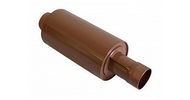
What is an Expansion Compensator?
Feb 11th 2026
Metal pipes naturally grow and shrink whenever the temperature of the fluid inside them changes. This constant moving around puts a huge amount of stress on your joints, hangers, and expensive heating gear. We know that installing high-quality copper expansion compensators is easily the best way to handle this thermal growth safely! These compact gadgets act like a specialized spring to take the pressure off your rigid piping systems. By using a clever bellows-style design, you stop the buckling and cracking that usually leads to a total system failure. This smart engineering gives your hot water and steam lines a safe way to move without breaking anything!
Planning out a commercial heating or cooling system takes more than just powerful pumps and boilers. You really need a way to protect your setup from the silent damage caused by pipes growing and shrinking. We recommend using professional grade Expansion Compensators to keep your building quiet and your maintenance costs way down! Our team has all sorts of setups to fit the specific axial movement needs of your unique industrial shop. The internal bellows are shielded by a tough outer shell to keep them safe during installation. Choosing this durable fix today means you won't have to deal with the high costs of pipe fatigue later on!
What Exactly Is an Expansion Compensator?
An expansion compensator is a compact, bellows-type device designed to absorb axial pipe movement caused by thermal changes in a system. We build these units with a flexible internal membrane that squishes down as the pipe gets longer from the heat. Unlike those big expansion loops, these units fit into tiny spaces and don't need any extra maintenance once they're in! They give you a streamlined way to handle the physical changes that happen in every hot or cold line. Because they're so small, they help keep your mechanical rooms organized and easy for your crew to walk through. This tech is a must-have for modern high-rise plumbing and big industrial heating networks!
How Do These Devices Protect Your Piping Infrastructure?
Expansion compensators protect piping by acting as a safety valve for physical movement, allowing pipes to expand linearly while keeping fluid contained within internal stainless steel bellows. Without a way to move, a growing pipe will just push against its anchors until something finally snaps or bends! We’ve seen this cause expensive leaks inside walls and damage boiler connections in plenty of older buildings. These devices stop that annoying "knocking" sound you often hear in steam pipes and keep the metal from getting worn out. Keeping your pipes steady helps every gasket and valve in your facility last a whole lot longer!
Why Are Copper Models Ideal for Commercial HVAC?
Copper expansion compensators are ideal for commercial HVAC because they offer superior corrosion resistance, high thermal conductivity, and seamless compatibility with standard copper plumbing lines.
Compatibility: They sweat or thread right into your existing copper lines for a fast and permanent connection!
Corrosion Resistance: The materials we use stop the internal scaling that often clogs up other types of expansion joints.
Compact Design: These units take up way less room than old-fashioned pipe loops or big rubber bellows.
Maintenance Free: Once you get these installed properly, they don't need any regular greasing or adjusting from your team!
What Is the Difference Between Axial and Lateral Movement?
Axial movement refers to compression or extension along the longitudinal axis of the pipe, while lateral movement involves side-to-side or shear displacement across the pipe's path.
|
Movement Type |
Direction of Travel |
Primary Solution |
|
Axial |
Compression along the pipe axis |
Standard expansion compensators |
|
Lateral |
Side-to-side or shear movement |
Flexible hose or offset expansion joints |
|
Angular |
Bending or rotating at an angle |
Ball joints or specialized hinged bellows |
|
Torsional |
Twisting around the pipe axis |
Specialized reinforced metal hoses |
Can You Use These in High-Pressure Steam Systems?
Expansion compensators are suitable for high-pressure steam systems when equipped with high-grade stainless steel bellows designed to withstand thermal cycling and corrosive treated steam. We build our compensators to handle plenty of pressure while keeping everything leak-proof! This mix of materials means the unit can move thousands of times without losing its springy feel. We’ve found that these units are essential for keeping steam headers steady when you’re starting up or shutting down. Getting your steam distribution right starts with managing how the lines physically move!
How Do You Install a Compensator Correctly?
Proper installation involves placing the expansion compensator near a main anchor point and using pipe guides to ensure all thermal growth is directed axially into the device. At Lehigh Valley Valve, we suggest putting the unit as close to a main anchor as you can to keep the growth under control. You also have to use pipe guides so the pipe moves in a perfectly straight line toward the compensator! If the pipe bows or bends, it can put lopsided pressure on the bellows and cause them to fail early. Our team has detailed guides to help your contractors set everything up perfectly for your specific local weather.
Why Should You Avoid Using Expansion Loops?
Expansion loops are less efficient than compensators because they require significantly more space, increase material and labor costs, and create higher friction loss within the piping system. Loops also need a ton of extra fittings, which just gives leaks more places to start! We often find that compensators are much more cost-effective when you look at the price of the extra pipe and labor. A straight pipe run with a compensator is way more efficient and looks much more professional in your mechanical room. We really believe modern shops should ditch those bulky loops for these compact solutions!
How Do These Units Help With Noise Reduction?
Expansion compensators reduce system noise by absorbing the thermal energy that causes pipes to rub against hangers, eliminating the loud banging and clicking sounds associated with thermal expansion. This makes things much quieter for anyone living or working near the mechanical systems! A quiet system is usually a sign of a healthy, well-engineered piping network that isn't under any stress. By cutting down on the noise, you also stop the vibrations that can loosen up bolts and other mechanical parts over time.
In Summary:
We know that keeping your building safe for the long haul depends on how you handle your pipes moving around. Lehigh Valley Valve specializes in giving expert advice and high-quality copper expansion compensators for any job, big or small! Our team is ready to help you figure out exactly how much your lines will grow so you can pick the right gear. You can find all the technical specs and order your Expansion Compensators right from our website today. Teaming up with us gives you the reliable tools and the professional support you need to keep everything running smoothly!
FAQs
What is the average lifespan of an expansion compensator?
It mostly depends on how much the temperature cycles and the pressure in the system. Most high-quality units will last for over twenty years if they’re installed and guided correctly. Just give them a look every now and then!
Do expansion compensators require regular lubrication?
Nope! These units are totally self-contained and don't need any grease or oil. The movement happens inside the flexible metal bellows, so there are no sliding parts to wear out or get stuck. It’s a "set it and forget it" fix!
Can these units be installed vertically?
You bet! You can put them in horizontal or vertical pipe runs. Just make sure the pipe is guided properly so the weight of the water doesn't push the bellows sideways. Good alignment is the key to making vertical runs work!
What happens if a compensator is over-compressed?
Over-compressing can permanently dent or warp the internal metal bellows. This ruins the device's ability to move and might cause a leak. Always follow the instructions to set the right distance before you fire up the system!
Are they suitable for drinking water systems?
Yes! We have lead-free copper models that are perfectly safe for drinking water. These units are great for stopping those loud pipe noises you often hear in hot water systems in hotels, hospitals, and big apartments.