
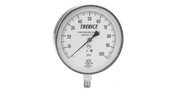
Where to Buy a Water Pressure Gauge That You Can Trust?
Feb 5th 2026
Keeping things moving in your pipes takes more than just tough valves; you really need to know what’s happening inside! We see so many folks dealing with the headache of leaky seals or burst pipes just because they couldn’t spot a hidden pressure jump. We truly believe every manager deserves a reliable pressure gauge to act as a set of eyes for the whole operation. Without one, you're basically flying blind and risking expensive damage every single day! Our team at Lehigh Valley Valve is here to help you watch those shifts in real-time so you can catch small leaks before they turn into huge disasters. Adding a pro-level gauge is the fastest way to keep your network steady and keep your gear safe for the long haul!
Picking the right place to buy your gear is just as important as the gear itself! You need a partner who knows the difference between a cheap tool and a real industrial workhorse. We’d love to show you why we're the top choice when you're looking for a tough pressure gauge for your water or steam lines. Our shelves are packed with stainless steel and brass options built to handle the shakes and rattles of a busy plant! When you work with us, you get expert tips on calibration and parts that meet high ASME standards. We make sure you get hardware that’s easy to read and stays leak-free for years. Getting your hands on our professional tools today is a smart move to avoid the high costs of bad data later on!
Why Is Accurate Pressure Monitoring Essential for System Longevity?
Knowing your exact pressure stops pipes from bursting and keeps your gear from wearing out way too soon! We often see systems fail because a hidden pressure spike went unnoticed for weeks at a time. A solid gauge lets you spot these issues before they wear down your pipe joints or blow out a gasket. We suggest putting gauges in smart spots, like right before and after your main valves, to see how the flow is doing. This info tells you exactly when a valve needs a fix or if your pumps are working too hard. Keeping a close eye on things keeps your whole network happy and your maintenance schedule on track!
How Do You Select the Correct Dial Size for Your Environment?
Picking the right dial size is all about making sure you can see the numbers clearly from wherever you're standing! Being able to read your data quickly is just as vital as the accuracy of the parts inside. We carry a bunch of different sizes so your team can get a clear reading without any squinting!
Small Dials (1.5" to 2"): These are great for tight spots, small machines, or portable kits where you don't have much room.
Medium Dials (2.5" to 4"): This is our "go-to" size for most regular plumbing and industrial water lines.
Large Dials (4.5" to 6"): We suggest these for high-up spots or super important lines where you need to be exact.
Test Dials (8"+): These are perfect for lab work or when you need a huge display for super fine measurements!
Should You Choose Liquid-Filled or Dry Gauges?
Liquid-filled gauges use stuff like glycerin to stop the needle from shaking, while dry gauges are fine for steady, quiet spots. Vibration is the enemy of accuracy and can make a dry gauge needle jump all over the place! We offer liquid-filled gauges to soak up those shakes and protect the gears from wearing out. The liquid also keeps things lubricated, which helps your gauge live a much longer life! If your pipes are steady and don't pulse much, a standard dry gauge is a solid, budget-friendly pick. We'll help you look at your pumps to see which style will give you the steadiest reading!
|
Gauge Type |
Primary Application |
Technical Advantage |
|
Standard Dry |
Indoor commercial plumbing |
Cheap and super easy to look after! |
|
Glycerin Filled |
Near shaky pumps |
Stops the needle from jumping around! |
|
Stainless Steel |
Outdoor and wet areas |
Won't rust or corrode in the rain! |
|
Digital Sensor |
Remote monitor stations |
Super precise and saves your data! |
Why Is the Pressure Range Choice Critical for Safety?
The best rule of thumb is to pick a gauge that goes up to double your normal pressure! This keeps the internal "Bourdon tube" from getting tired or snapped by a sudden jump. At Lehigh Valley Valve, we always tell our friends to pick a range about twice as high as what they usually run. This gives you a safety buffer so nothing gets stretched out of shape if there's a surge! For example, if you usually run at 60 PSI, grab a gauge that goes to 120 PSI. Staying in the middle of the dial gives you the best accuracy and keeps the needle from hitting the pin. Our experts can help you do the math for your specific setup!
Can a Pressure Gauge Help You Troubleshoot Valve Issues?
Think of your pressure gauge as a doctor’s tool that can spot leaks or clogs just by looking at the pressure drop! If you see the pressure dip suddenly, it’s a big hint that a valve nearby might be failing. We use gauges as the main way to find blockages or leaks in a big, messy network. By looking at readings in different spots, you can find the trouble without having to take everything apart! This saves your crew hours of hard work and keeps your water running. Accurate gauges take the guessing out of the job and make fixing things a breeze!
Final Thought:
We know your system’s safety depends on the info you get from your tools. Lehigh Valley Valve is the best spot to find a pro pressure gauge for just about any job! Our team is ready to help you find the perfect size and materials for your specific setup. You can check out all our gear and technical info on our website whenever you're ready. Working with us means you'll have the right tools and friendly support to keep everything flowing perfectly!
FAQs
Q1. What is the ideal pressure for a residential water system?
A: Most homes should sit between 40 and 60 PSI. If it goes over 80, you might damage your heater or end up with leaky sinks and burst pipes! Use a regulator if your street pressure is way too high.
Q2. How often should I calibrate my industrial pressure gauges?
A: Try to check them once a year to make sure they’re still telling the truth! If they’re in a hot or shaky spot, you might want to check them every six months instead. It keeps your data from drifting!
Q3. Can I use an air pressure gauge for water service?
A: It’s better to use one that’s actually made for water! Water-rated gauges use parts that won't get gunked up or rusty. Using an air gauge in a water line can lead to clogs and bad readings pretty quickly.
Q4. What causes a pressure gauge to leak from the front?
A: A leak in the front usually means a tube inside snapped or a seal gave out. If it’s liquid-filled, it might just be a bad gasket. But if the water is leaking out, swap it for a new one right away!
Q5. Why is my gauge needle jumping or vibrating?
A: That usually happens because a pump is pulsing or a valve is clicking open and shut too fast. Try a "snubber" or a liquid-filled gauge to smooth things out. It’ll save your gears from wearing down!