
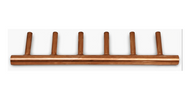
How to Choose the Right Copper Branch Manifold for Your Project
May 11th 2026
When we start a new plumbing or HVAC project, the distribution logic is our most critical decision. We often see contractors overwhelmed by the variety of distribution methods available today. However, the search for efficiency always leads us back to a central hub.
Choosing a high-quality copper branch manifold acts as the heart of a high-performing system. It simplifies the layout and ensures that every fixture receives consistent pressure.
We believe that understanding the nuances of fluid dynamics helps in making the right choice. A copper branch manifold is not just a pipe with outlets. It is a precision tool designed to reduce the number of fittings behind a wall.
In the modern construction landscape, reducing leak points is a top priority for our teams. We focus on these components because they offer the reliability that newer synthetic materials sometimes lack in high-stress environments.
Why Does Material Grade Matter for Your System?
We often get asked why we still prioritize copper in a world full of plastic alternatives. The answer lies in the structural integrity and thermal properties of the metal. Copper resists corrosion and handles high temperatures without deforming.
When we install a system, we look for longevity that spans decades. Copper provides a natural antimicrobial property that helps maintain water quality in potable systems.
A recent industry trend shows that nearly 40 percent of commercial mechanical failures stem from joint fatigue. We mitigate this risk by using specialized manifolds. These components minimize the number of sweat or press joints required to feed multiple lines.
By using a single trunk line, we maintain a more stable velocity of flow throughout the building.
How Do You Determine the Correct Port Count?
Planning the layout requires a forward-thinking approach to plumbing architecture. We suggest mapping out every fixture before selecting your hardware. It is often better to have an extra port than to be one short during the final phase. We categorize our selection process into three main steps:
- Identify the total number of cold and hot water termination points.
- Calculate the required flow rate for the furthest fixture in the run.
- Account for future expansions or basement finishes that might require more taps.
- Measure the available wall cavity space to ensure the manifold fits comfortably.
|
Manifold Feature |
Benefit to the Contractor |
Impact on the Homeowner |
|
Pre-soldered Branches |
Reduced labor time on site |
Lower initial installation cost |
|
Type L Copper |
Superior wall thickness |
Increased resistance to pinhole leaks |
|
Lead-Free Construction |
Meets all federal safety codes |
Safe and clean drinking water |
|
Spin-Closed Ends |
Faster pressure testing |
Peace of mind during construction |
What Is the Impact of Branch Diameter on Pressure?
We pay close attention to the diameter of the branches compared to the main trunk. Most standard systems use a 1-inch or 2-inch trunk with half-inch branches. If the branches are too small, you will notice a significant pressure drop when two showers run at once.
We design systems to avoid this "competition" for water. A properly sized trunk ensures that the volume of water is always ready to meet the demand of the branches.
We also consider the type of connection style that best suits the labor force. Whether you prefer traditional soldering, PEX crimping, or press technology, the manifold must match your tooling.
We find that press-fit manifolds are gaining popularity because they eliminate the need for an open flame on the job site. This change improves safety and speeds up the inspection process.
How Does a Manifold Improve Maintenance and Repair?
One of the biggest advantages we see is the ability to centralize shut-off points. If a leak occurs at a single sink, you do not have to shut down water to the entire house. You simply turn off the valve at the manifold.
This level of control is a standard requirement in high-end commercial projects. We advocate for this "home run" plumbing strategy because it makes troubleshooting very simple.
We also find that manifolds reduce the noise of water hammer. When water flows through a series of "T" fittings, it creates turbulence and vibration. A central distribution hub allows for a smoother transition of fluid.
This results in a quieter home environment for the end-user. We believe the comfort of the occupant is just as important as the mechanics of the pipe.
Can One Manifold Handle Both Radiant Heat and Potable Water?
We must distinguish between different types of applications when selecting hardware. Radiant heating systems often require manifolds with balancing valves and flow meters. These allow us to fine-tune the heat in each room.
Potable water systems are simpler but require strict adherence to lead-free regulations. We never recommend mixing these two types of manifolds.
The oxygen barrier requirements in heating systems are also a major factor. While copper is naturally an oxygen barrier, the fittings and valves must be compatible with the glycol or treated water used in closed-loop systems.
We always check the pressure ratings at specific temperatures to ensure the manifold can handle the heat of a boiler system.
What Are the Best Practices for Installation?
We follow a strict protocol to ensure the manifold remains secure for the life of the building. We always use heavy-duty mounting brackets to prevent the unit from vibrating. If a manifold is loose, the constant expansion and contraction of the copper will eventually stress the joints.
We recommend installing the unit in an accessible location, such as a utility room or a dedicated plumbing closet.
When we work with copper, we also consider the expansion of the metal. Copper expands about one inch for every 100 feet of pipe with a 100-degree temperature rise. We build in slight offsets to allow for this movement.
This attention to detail separates a professional installation from a DIY project. We want our systems to be silent, efficient, and durable.
How Do We View the Future of Distribution?
We see the industry moving toward even more modular solutions. The integration of smart sensors into the manifold is the next step in plumbing evolution. Imagine a system that alerts your phone the moment it detects an unusual flow pattern in a specific branch.
While the technology changes, the core material remains the same. The reliability of copper stays at the center of our professional recommendations.
We choose our components based on a history of proven performance in the field. Every project has unique challenges, but a solid foundation prevents the most common failures.
We value the feedback from our contractors who use these parts every day. Their insights help us refine our inventory and support services.
Conclusion
Finding the right balance between cost and quality is the key to any successful build. We have seen how a high-quality copper branch manifold transforms a chaotic piping layout into a clean and organized system.
It provides the control and durability that modern buildings require. By selecting the right port count and connection type, we ensure a smooth installation process for every team involved.
For those looking for technical guidance and a wide range of specialized plumbing components, Lehigh Valley Valve provides the necessary inventory and expertise.
We remain committed to supporting the trades with reliable products that stand the test of time. Our goal is to help you build systems that perform better and last longer.
Frequently Asked Questions
What is a copper branch manifold?
A copper branch manifold is a centralized distribution hub for plumbing and heating systems. It consists of a large main trunk pipe with multiple smaller outlet ports. This design allows water to flow from a single source to various fixtures while maintaining consistent pressure and reducing the number of joints.
What types of copper branch manifolds are available?
We offer various configurations, including valved or non-valved ports, and closed-end or through-trunk designs. Common variations include Type L or Type M copper with branch sizes typically ranging from half-inch to one inch. Connection options include traditional sweat, PEX crimp, or modern press-fit ends to suit any installation preference.
How do you install a copper branch manifold?
Mount the manifold securely using heavy-duty brackets in an accessible area. Connect the main water supply to the trunk and individual lines to the branches. Ensure all joints are properly soldered or pressed. We recommend pressure testing the entire unit before closing walls to verify there are no leaks or vibrations.
How do you maintain a copper branch manifold?
Copper is naturally low-maintenance and resists corrosion. We suggest performing a visual inspection annually to check for any mineral buildup or external moisture. If your manifold includes individual shut-off valves, cycle them occasionally to ensure smooth operation. Proper initial mounting prevents the vibration-related wear that leads to long-term fatigue.