
How to Select the Right Mueller Steam Specialty Equipment for Your Needs
May 6th 2026
We understand that choosing the right fluid control components often feels like a high-stakes puzzle. In industrial environments, a single miscalculation in hardware selection can lead to months of system downtime. When we look at precision engineering in this sector, Mueller Steam Specialty stands out as a foundational name.
Selecting the correct equipment from their catalog requires more than just checking a part number. It requires a deep understanding of how pressure, temperature, and media interact within your specific piping architecture.
We have seen countless projects where the difference between success and failure was the specific type of strainer or valve chosen. Many operators assume that any industrial-grade component will suffice. However, the nuances of Mueller Steam Specialty engineering are designed for specific hydraulic challenges.
In this guide, we will explore the critical decision points that ensure your system remains efficient and safe. We will look past the basic specs to find the real-world logic that professionals use every day.
Why does your choice of strainer impact system longevity?
The primary job of a strainer is to protect expensive downstream equipment. Pumps, meters, and delicate control valves are vulnerable to debris. A small piece of weld slag or a pebble can ruin a high-performance pump in seconds.
When we evaluate options, we must look at the "open area ratio" of the basket. This ratio determines how long a strainer can operate before it creates a significant pressure drop.
Many systems fail because the mesh size is too fine for the fluid viscosity. If the mesh is too tight, the pump works harder and consumes more energy. If it is too loose, debris passes through and damages the system.
Recent industry data suggests that nearly 40 percent of premature pump failures are caused by improper suction-side filtration. We recommend calculating the maximum particle size your system can tolerate before you finalize your hardware choice.
How do you balance flow capacity with physical space?
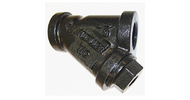
Space constraints often dictate which model you can install. Y-strainers are the standard choice for tight spaces or high-pressure steam lines. They are compact and handle vertical or horizontal flows with ease.
However, they have a smaller holding capacity for debris. This means your maintenance team will need to blow down the screen more frequently.
If you have more floor space, a duplex or basket strainer might be the better path. These models offer a much larger collection area. Duplex models allow you to switch the flow between two chambers.
This means you never have to shut down the line to clean a screen. We often suggest these for continuous processes where every minute of uptime equals revenue. The table below outlines the general trade-offs between the most common configurations we supply.
|
Equipment Type |
Best Use Case |
Orientation |
Maintenance Level |
|
Y-Strainer |
Steam and High Pressure |
Vertical or Horizontal |
High Frequency |
|
Basket Strainer |
Liquid Systems |
Horizontal Only |
Medium Frequency |
|
Duplex Strainer |
Continuous Flow |
Horizontal Only |
Low Frequency |
|
Check Valve |
Backflow Prevention |
Variable |
Set and Forget |
What role does metallurgy play in your selection?
Selecting the right material is not just about strength. It is about chemical compatibility and thermal expansion. Cast iron is excellent for standard water systems and offers a cost-effective solution.
However, it is brittle and does not handle thermal shock well. For high-temperature steam or volatile chemicals, we look toward carbon steel or stainless steel options.
Stainless steel provides superior corrosion resistance but comes at a higher price point. If you are handling salt water or corrosive brines, bronze or specialty alloys are mandatory.
We always check the pH levels and the presence of abrasive particulates before making a recommendation. Choosing the wrong metal leads to galvanic corrosion, which can thin the walls of your valves from the inside out.
How do check valves prevent water hammer?
Water hammer is a violent pressure surge that occurs when a fluid in motion is forced to stop or change direction suddenly. This shock can burst pipes and shake fittings loose.
To prevent this, we look at the closing speed of the check valve. A silent check valve uses a spring-loaded disc that closes just before the flow reverses.
This proactive closing prevents the "slam" associated with traditional swing check valves. When we integrate these into a system, we consider the "cracking pressure."
This is the minimum pressure required to open the valve. If your system runs at low pressure, a heavy spring might prevent the valve from opening fully. We ensure the spring tension matches your pump's output to maintain a smooth flow.
Can your equipment handle extreme temperature swings?
Temperature affects the seals and the physical dimensions of the valve body. In steam applications, components must withstand rapid heating and cooling cycles.
This expansion and contraction can cause leaks at the flange or the bonnet. We look for designs that feature bolted covers rather than threaded ones for high-temperature service.
Bolted covers are easier to maintain after they have been through many heat cycles. They also provide a more reliable seal under fluctuating pressures.
We often remind our partners that a valve rated for 200 PSI at room temperature may only be rated for 150 PSI at 400 degrees Fahrenheit. Always consult the pressure-temperature charts provided by the manufacturer.
What are the hidden costs of poor selection?
The purchase price of a valve is only a small fraction of its total cost of ownership. We consider the "K-factor" or the pressure drop across the device.
A valve that causes a high pressure drop forces your pumps to work harder. Over five years, the extra electricity cost can exceed the price of the valve itself.
- Evaluate the ease of replacing internal parts.
- Check for local availability of gaskets and screens.
- Consider the weight of the unit for installation labor.
- Review the warranty terms for industrial applications.
- Assess the reputation of the manufacturer in your specific niche.
We find that focusing on repairability saves more money than finding the lowest initial price. If a technician can swap a screen in ten minutes, the system stays profitable.
If the whole valve must be cut out of the line, the costs skyrocket. Efficiency is a long-term metric that requires a disciplined approach to procurement.
How does Lehigh Valley Valve assist in this process?
Selecting the right equipment requires a blend of engineering data and practical experience. We provide the technical support needed to navigate these complex variables. Our team helps you match your specific flow requirements with the most durable hardware available.
We focus on providing clear information and reliable shipping to keep your projects on track. For those looking for specialized fluid control solutions, Lehigh Valley Valve serves as a primary resource for industry-standard components.
Whether you need a single replacement part or a complete system overhaul, we ensure you receive the correct Mueller Steam Specialty technical specifications for your needs.
Frequently Asked Questions
What is the difference between a Y-strainer and a basket strainer?
Y-strainers are compact and designed for high-pressure steam or gases. Basket strainers have a larger debris capacity and are used in liquid horizontal piping for easier cleaning and maintenance.
How often should I clean the strainer screen?
Cleaning frequency depends on fluid cleanliness. We recommend installing pressure gauges before and after the strainer. When the pressure differential increases significantly, it is time to clean the screen.
Can I install a check valve in a vertical pipe?
Yes, but only if the flow is upward. Most check valves rely on gravity or springs to close. Installing one in a downward vertical flow usually prevents the valve from seating.
What mesh size do I need for my system?
Mesh selection depends on the smallest orifice in your downstream equipment. We usually suggest a screen that catches particles half the size of the smallest opening you need to protect.
Why is ductile iron better than cast iron?
Ductile iron has more flexibility and impact resistance than standard cast iron. It handles physical shock and pressure surges better, making it safer for critical industrial applications and high-traffic lines.