
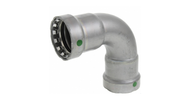
What are the different types of carbon steel fittings?
Apr 12th 2026
We know that choosing the right parts is the most important step for any piping project. Carbon steel is a top pick for pros because it stays strong even when things get very hot. One of the most popular choices today is carbon steel press fittings because they change how we handle high-pressure jobs.
These carbon steel press fittings create a tight seal without using any open flames or heavy welding gear. We see these parts used every day in chilled water lines, air systems, and fuel pipes. Using the right fittings helps keep your system safe and saves you money on labor costs.
Why do we choose carbon steel for industrial work?
Carbon steel is a mix of iron and a tiny bit of carbon. This mix makes the metal very tough and able to handle much higher pressures than plastic or copper. Data shows that carbon steel can handle temperatures up to 800 degrees Fahrenheit in some industrial settings. We use it because it does not bend easily and costs less than stainless steel for big projects.
What are the main types of carbon steel fittings?
We group these parts by how they connect to your pipes and what they do in the system. The three most common types are threaded, socket-weld, and butt-weld. Each one has a specific job based on how much pressure the pipe needs to hold.
Threaded Fittings: These have grooves like a screw and work best for smaller, low-pressure pipes.
Socket-Weld Fittings: The pipe slides into a small pocket before a pro welds it into place.
Butt-Weld Fittings: These line up edge-to-edge for a full weld, making them the strongest choice for permanent lines.
Flanges: These are flat rings that let us bolt pipes to valves or pumps so they can be taken apart later.
How do different shapes help your piping layout?
The shape of a fitting tells the liquid or gas where to go. We keep many different shapes in stock to make sure your layout is safe and flows well.
Elbows: These help the pipe turn a corner, usually at a 90-degree or 45-degree angle.
Tees: These look like the letter T and let one pipe branch off into two directions.
Reducers: These help you move from a big pipe to a smaller pipe without losing pressure.
Caps: These act like a lid to close off the end of a pipe so nothing leaks out.
Couplings: These are simple connectors that join two straight pipes of the same size together.
Why is press technology growing so fast in the industry?
New technology has brought us "cold-press" methods that do not need heat. Industry research suggests the global market for press fittings is growing by over 5% each year. We see more contractors switching to this method because it is much faster than welding.
|
Feature |
Old-School Welding |
Modern Press Technology |
|
Time to Install |
Can take hours |
Done in seconds |
|
Fire Risk |
High (needs fire watch) |
Zero (no sparks or flames) |
|
Equipment |
Heavy tanks and masks |
One portable hand tool |
|
Labor Cost |
High (needs a specialist) |
Lower (easier to learn) |
|
System Clean |
Can leave debris inside |
Stays clean and smooth |
Where is the best place to use these components?
The job you are doing usually decides which fittings you need to stay up to code. For example, fire sprinkler systems must use parts that are UL/FM certified to ensure they work during a fire. In heating and cooling (HVAC), we often mix threaded parts with press parts to handle the way metal grows when it gets warm. Big factories rely on thick butt-weld parts to move chemicals safely.
How can you make your piping system last longer?
Good maintenance and choosing the right finish are the secrets to a long-lasting system. We suggest using galvanized coatings if your pipes are outside or in a wet area to stop rust. Checking your pipes for small leaks once a year can save you from a huge repair bill later. Always check that your fittings are rated for the highest pressure your pumps can create.
Conclusion
Finding the right parts is the secret to a pipe system that lasts for decades. At Lehigh Valley Valve, we give you the expert help and the big inventory you need to get the job done right. We carry a full stock of carbon steel press fittings and industrial valves for any size project. Our team is here to help you with fast shipping and real-world advice. You can count on Lehigh Valley Valve for all your industrial pipe and tool needs.
Frequently Asked Questions
What are carbon steel press fittings?
These are modern pipe connectors that use a mechanical tool to squeeze the metal onto the pipe. They have a rubber ring inside that creates a permanent seal. We use them because they are much faster and safer than welding.
How do carbon steel press fittings work?
You slide the fitting onto a clean pipe and use a battery-powered press tool. The tool's jaws clamp down with thousands of pounds of force to lock the metal in place. This creates a joint that will not leak even under high pressure.
What are the benefits of carbon steel press fittings?
The biggest benefit is speed, as you can finish a job in half the time it takes to weld. You also do not have to worry about fire hazards or smoke on the job site. This makes the workspace much safer for everyone.
Where are carbon steel press fittings commonly installed?
We see them most often in heating systems, chilled water lines, and factory air systems. They are also great for fuel lines and fire protection systems in large buildings. Many pros prefer them for quick repairs because they are so easy to use.