
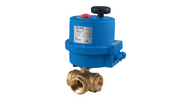
What Is a Ball Valve? A Simple Guide to Better Flow Control
Apr 9th 2026
We design systems that must move liquids or gases safely and quickly. A ball valve helps us do that with simple control and strong sealing. It works in homes, commercial buildings, and large industrial setups.
We often recommend a Bonomi Ball Valve because it offers steady performance and long service life. Many studies show that quarter-turn valves reduce operation time by up to 80 percent compared to multi-turn valves. This speed matters in systems where quick shutoff prevents damage or loss.
What Is a Ball Valve and How Does It Work?
A ball valve is a simple device that controls flow using a round ball with a hole. When we turn the handle, the ball rotates to open or close the flow path. This action takes only a quarter turn.
We prefer this design because it is easy to use and reliable. A Bonomi Ball Valve allows quick shutoff with very little effort. When closed, the solid part of the ball blocks the flow completely.
This tight seal helps prevent leaks. Research shows that ball valves can achieve near-zero leakage when properly installed. That level of control supports safety and efficiency.
What Are the Main Parts of a Ball Valve?
We always look at the internal parts before selecting a valve. Each part plays a key role in performance.
Here are the basic components:
- The body that holds all internal parts
- Ball with a hole for flow control
- The stem that connects the handle to the ball
- Seats that seal around the ball
- Handle or actuator for operation
A Bonomi Ball Valve uses strong materials for these parts. This improves durability and keeps the valve working smoothly over time.
Why Do We Choose Ball Valves Instead of Other Options?
We often compare ball valves with gate or globe valves. Ball valves offer clear advantages that improve system performance.
Key benefits include:
- Fast opening and closing
- Strong sealing with low leak risk
- Simple design with fewer moving parts
- Low maintenance needs
- Compact size for easy installation
A Bonomi Ball Valve combines these benefits with proven manufacturing quality. This helps us build systems that last longer and perform better.
Where Are Ball Valves Commonly Used?
We use ball valves in many different systems because they are flexible and reliable. They work well with water, air, oil, and some chemicals.
Common uses include:
- Water supply lines in homes and buildings
- Heating and cooling systems
- Industrial processing lines
- Fire protection systems
- Gas distribution networks
A Bonomi Ball Valve fits these applications easily. It handles different pressures and temperatures without losing performance.
How Do Materials Affect Ball Valve Performance?
Material choice affects how long a valve lasts and how well it performs. We select materials based on the system's needs.
Here is a simple comparison:
|
Material |
Key Benefit |
Typical Use |
|
Brass |
Resists corrosion |
Water systems |
|
Stainless Steel |
High strength |
Industrial use |
|
PVC |
Lightweight |
Low-pressure systems |
A Bonomi Ball Valve is available in different materials. This helps us match the valve to the exact application.
How Do We Select the Right Ball Valve?
We follow a clear process when choosing a valve. Each system has different needs, so we evaluate key factors carefully.
We consider:
- Pressure and flow requirements
- Temperature range
- Type of fluid
- Installation location
- Maintenance access
A Bonomi Ball Valve often meets these requirements because of its reliable design. We use proven data and specifications to guide our choice.
What Types of Ball Valves Are Available?
We work with several types of ball valves based on system design. Each type serves a different purpose.
Common types include:
- Full port valves for maximum flow
- Reduced port valves for controlled flow
- Three-way valves for directing flow
- Floating ball valves for standard systems
- Trunnion-mounted valves for high pressure
A Bonomi Ball Valve comes in many of these types. This gives us flexibility when designing systems.
How Do Ball Valves Support Efficiency?
Efficiency is important in every system we design. Ball valves help improve efficiency by reducing pressure loss when fully open. This allows smooth flow with minimal resistance.
We also reduce downtime by using reliable components. A Bonomi Ball Valve performs consistently even after many cycles. Studies show that valves with fewer moving parts often last longer and require less maintenance.
This reduces repair costs and keeps systems running without interruption.
Why Does Proper Installation Matter?
Even the best valve will fail if installed incorrectly. We follow proper installation steps to ensure long-term performance.
A Bonomi Ball Valve is easy to install because of its simple design. This reduces errors and speeds up the process. Proper alignment and sealing help prevent leaks and improve efficiency.
We also recommend regular inspection. Simple checks can extend the life of the valve and prevent unexpected issues.
Conclusion: Building Reliable Systems With the Right Valve Choice
We believe strong systems start with smart component choices. Ball valves offer a simple and effective way to control flow with speed and accuracy. A Bonomi Ball Valve provides the reliability and performance we expect in modern systems.
At Lehigh Valley Valve, we focus on delivering solutions that meet real-world needs. We supply trusted products like the Bonomi Ball Valve to help build efficient and dependable systems. Our approach combines product quality with practical knowledge to support long-term success.
FAQs
How do you replace a ball valve?
First, shut off the main fluid supply and drain the pipes. Disconnect the old valve by unscrewing the threaded ends or cutting the pipe if it is soldered. Clean the pipe ends and install the new unit following alignment guidelines.
What are the types of ball valves?
Common types include floating, trunnion-mounted, full port, and reduced port designs. You can also find multi-port options like three-way or four-way valves. These variations allow engineers to customize flow direction and pressure management within complex industrial piping networks.
What is the purpose of a ball valve?
The primary purpose is to provide reliable on-off flow control for liquids and gases. They offer a bubble-tight seal and quick operation. This makes them essential for isolation in plumbing, chemical processing, and emergency shut-off systems across various industries.
Where are ball valves used?
We find them in residential plumbing, municipal waterworks, and massive oil refineries. They are also common in food processing, chemical plants, and HVAC systems. Their versatility allows them to handle everything from simple drinking water to highly corrosive industrial acids.