
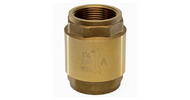
What is an In-Line Check Valve?
May 8th 2026
The modern industrial world depends on a steady flow of liquids and gases. Inside these complex systems, we often miss the small parts that prevent big disasters. One of these heroes is the In-Line Check Valve. This device has one main job. It lets liquids flow one way and stops them from ever flowing back. We think of these parts as the silent guards for your pumps, heaters, and tools.
Plumbing and industrial systems are full of surprises. Without an In-Line Check Valve, a sudden drop in pressure could cause a backflow event. This reversal can ruin clean water or break expensive pumps. We believe that knowing how these valves work is not just about technical facts. It is about keeping your whole operation safe with a smart and simple design.
What makes an inline check valve unique?
Most valves need a handle or a computer signal to work. The inline type is different because it works all by itself. It uses the pressure of the liquid to open and close. When the pressure gets high enough, it hits the cracking pressure, and the valve opens. If the pressure drops or starts to go the wrong way, the valve snaps shut. This simple design is its best feature. It removes the risk of a person forgetting to turn a handle during a crisis.
Why do we worry about backflow?
Backflow is more than just a small mess. It means you have lost control of your pipes. In big factories, backflow can cause a water hammer. This sends a shock through the pipes that can snap metal in half. Research shows that about twenty-five percent of pump failures happen because of backflow or missing valves. By using the right valve, we help you stop these costly breaks before they ever happen.
How does the internal mechanism actually work?
Inside the valve body, there are only a few small parts. You will usually find a disc, a ball, or a plug held by a spring. This spring has a set amount of strength. We call this the cracking pressure. Once the pump turns on and pushes hard enough, the spring moves and the path opens up. When the pump stops, the spring pushes the disc back into place. This makes a tight seal that keeps the liquid from moving backward.
Where should you place these valves in your system?
Where you put the valve is just as important as the valve itself. We usually suggest putting them right after a pump. This keeps the pump ready to go and protects its parts from the weight of returning water. You will also see them in home heaters to keep hot water from mixing with cold lines. They are vital in chemical plants where mixing the wrong liquids could be very dangerous.
What are the main types of inline designs?
Different jobs need different types of seals. Depending on what you are moving—like gas, oil, or water—the inside design changes. Some use gravity to close, while others use strong springs so they can work in any position.
- Spring-loaded valves are great because they work in any direction.
- Ball check valves are best if your liquid is thick or has tiny bits of dirt in it.
- Diaphragm valves are very sensitive and work well for low-pressure gas.
- Dual plate designs take up very little space in big pipes.
- Piston checks are built for the high heat and pressure of steam.
|
Valve Feature |
Benefit |
Common Use Case |
|
Spring Loaded |
Works in any orientation |
General Plumbing |
|
Soft Seat |
Zero-leakage seal |
Gas and Air Lines |
|
Metal Seat |
High temperature resistance |
Steam and Boiler Feed |
|
Compact Body |
Saves space in tight skids |
OEM Equipment |
What happens when a check valve fails?
Even the best parts do not last forever. We usually see two types of failure: the valve sticks open, or it leaks when it should be closed. If a valve sticks open, it is not doing its job. It is just a regular pipe. If it leaks, you lose pressure and waste energy. Checking your valves often and picking the right material can stop these problems. Dirt is the biggest enemy because a tiny grain can stop the valve from closing all the way.
Is cracking pressure that important?
Yes, cracking pressure is a big deal that many people miss. If the spring is too strong, your pump has to work too hard. This wastes power and wears the pump out fast. If the spring is too weak, the valve might not close fast enough to stop a shock. We always suggest picking a spring that matches your flow. This keeps everything running smoothly without making the system struggle.
Can these valves handle vertical flow?
Many people ask us if these valves can be installed up and down. The answer depends on how they are built. A valve that uses gravity only works if the liquid is moving up. However, an inline spring-loaded valve is much better. Since the spring does the work, it does not matter how you turn the pipe. You can put it sideways, straight up, or at an angle.
How do materials impact performance?
The world outside the pipe can be just as tough as the liquid inside. Brass is great for regular water and plumbing. Stainless steel is the best choice for harsh chemicals or food systems. Carbon steel is very strong and works well for high-pressure oil systems. Picking the wrong metal can lead to rust or weak spots. This causes leaks that can be very dangerous for your workers.
How do we simplify the selection process?
Picking the right part should not be a chore. We look at how fast the liquid moves, how hot it gets, and the pressure. Once we know those facts, picking an In-Line Check Valve is easy. It is all about finding a balance between a good price and a part that lasts. We focus on giving you parts that are easy to put in and stay working for a long time.
What is the future of fluid control technology?
We are seeing new parts made from tough plastics and special metals. These new materials make valves lighter and help them handle more types of chemicals. Using sensors is also becoming popular. Some systems now use electronics to watch the valve move. This tells you the valve is wearing out before it actually breaks. This helps you fix things on your own schedule.
Conclusion
Keeping a pipe system running well takes a bit of care. Every part matters for the health of the whole system. The In-Line Check Valve is still one of the most trusted ways to keep your liquids moving the right way.
By stopping backflow and protecting your pumps, these valves save you both time and money. We at Lehigh Valley Valve know exactly how these parts work. Our team is here to help with your projects with the best supplies and tools.
Whether you are building a new office or running a factory, we have the skills and the parts to keep your systems moving right.
Frequently Asked Questions
How does an in-line check valve work?
These valves use the pressure of the flowing liquid to push open an internal disc or ball. When the pressure drops or the flow tries to reverse, a spring or gravity pushes the internal part back into a sealed position. This ensures the medium only travels in one direction.
Where are in-line check valves commonly used?
We see them everywhere, from home plumbing and HVAC systems to massive industrial plants. They are essential for protecting pumps from backflow, keeping heating lines separate, and managing chemical processing. Any system that needs to prevent fluid reversal or maintain pressure will likely use one of these valves.
What are the different types of in-line check valves?
The most common designs include spring-loaded poppet valves, which work in any position, and ball check valves for thick fluids. Other types include diaphragm valves for air, dual-plate designs for large pipes, and piston checks built to handle the high heat and pressure of steam systems.
How do I choose the right in-line check valve?
You should start by looking at your liquid type and the system pressure. Check the "cracking pressure" to ensure your pump can open the valve easily. Finally, pick a material like brass or stainless steel that can handle your specific chemicals and the temperature of your workspace.