
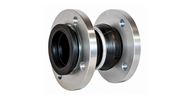
Why Your Piping Needs a Double Arch Expansion Joint
Jul 10th 2026
We often see piping systems deal with immense stress because of temperature swings, shifting pressure, and mechanical vibration, all at once. To protect your equipment from expensive failure, we suggest installing a specialized Double Arch Expansion Joint to soak up these unpredictable movements.
When fluid moves through industrial pipelines, thermal expansion can lead to buckling or cracking, especially over time. Using well-made expansion joints with rubber construction lets these flexible connectors bend and stretch in a controlled way without losing their structural integrity. In a number of recent industrial pipeline surveys, mechanical vibration shows up as nearly 40 percent of premature pipe joint failures. We believe choosing the right piping accessories is one of the most reliable ways to stop these issues before they grow into something bigger.
Why do modern piping systems require flexible connections?
Piping systems are not really static. When pumps start up, they create strong pressure surges and physical tremors that move down the line. If your piping is completely rigid, those forces have nowhere to go, which pushes intense stress onto anchors, flanges, and sensitive equipment.
We use elastomeric connectors for this reason. These parts work like shock absorbers for your system, allowing the pipes to expand and contract as temperatures change, which helps prevent structural fatigue and unwanted wear.
What makes a Double Arch Expansion Joint different from standard connectors?
The main difference lies in the physical design. A single arch connector works well for basic thermal movement. However, when you require greater movement capability in a compact space, a double arch design is the superior option. The second arch increases the flexible surface area, allowing the connector to handle twice the movement of a single-arch model.
To help you understand the differences, we compiled this comparison of performance characteristics:
|
Performance Metric |
Single Arch Connector |
Double Arch Connector |
|
Axial Compression |
Moderate capacity |
High capacity |
|
Lateral Deflection |
Standard protection |
Double the range |
|
Vibration Dampening |
Good reduction |
Superior isolation |
|
Space Required |
Minimal length |
Compact face-to-face |
How do rubber materials protect industrial piping from failure?
The elastomer material really does matter just as much as the shape of the connector; it’s kind of a package deal. We take on several rubber compounds: EPDM, Neoprene, and Nitrile, based on the chemical makeup of the fluid in your system. That careful matching step makes sure the connector fights corrosion and resists chemical breakdown over time.
- We also design these connectors to manage multiple stress vectors at the same moment. In one installation, they can handle, with little drama:
- Axial compression, where the pipes are pushed together.
- Axial elongation, where the pipes pull apart.
- Lateral deflection, when the pipes shift sideways.
- Angular rotation, where pipes twist, slightly or a lot.
How can you secure your mechanical infrastructure?
Putting money into quality components helps prevent surprise downtime and those expensive repairs that always seem to arrive early. When you install the proper flexible connections, you’re also safeguarding your pumps, valves, and strainers from mechanical stress.
As a trusted industrial distributor, Lehigh Valley Valve provides durable fluid control solutions, including the Double Arch Expansion Joint, plus high-grade expansion joint rubber components to keep your mechanical systems running smoothly.
Frequently Asked Questions
What are the benefits of using a double arch expansion joint?
A double arch design provides superior movement absorption in axial, lateral, and angular directions. It excels at dampening noise and isolating mechanical vibrations. This protects sensitive inline equipment, prevents pipe fatigue, and reduces overall maintenance costs across industrial, municipal, and commercial fluid systems.
How do I choose the right double arch expansion joint?
You must evaluate the system temperature, chemical compatibility, operating pressure, and expected movement. Matching the pipe fluid to the correct rubber compound prevents chemical failure. Additionally, verify that the pressure rating and face-to-face dimensions align perfectly with your existing piping system specifications.
Can double arch expansion joints be used in HVAC systems?
Yes, they are highly effective in HVAC applications. They isolate physical vibration from chillers, boilers, and cooling towers. By absorbing thermal expansion and mechanical noise, they prevent system damage and keep commercial buildings quieter, safer, and structurally sound over long-term operation.
How long does a double arch expansion joint last?
A high-quality rubber expansion joint typically lasts between 7 and 10 years. However, proper installation alignment, regular inspections, and using control rods can extend this lifespan. Extreme temperatures, exposure to incompatible chemicals, or excessive system movement can shorten the service life of the joint.